The government asked Apple for a master key. A court has made it finally admit it
A tribunal has forced the Home Office to admit it ordered Apple to open up encrypted iCloud data. I think the order is a disgrace, and Apple was right to refuse.

Ashley Adkins · · 4 min read
For the best part of two years, the Home Office has refused to say whether it ordered Apple to give it a way into people's encrypted iCloud data. Every question got the same answer: it could "neither confirm nor deny". On 19 November, a court told it to drop the act.
Three judges at the Investigatory Powers Tribunal, which hears complaints about state surveillance, ruled that the order exists and can be discussed in open court. Their reasoning is almost funny. The tribunal found that officials had already confirmed the order to journalists, and had allowed Apple to brief senior people in the US government. After that, the Home Office's claim that admitting it in court would damage national security was, in the judges' words, "flawed in the public law sense".
I think the order is a disgrace, and Apple was right to refuse it.
How we got here
The order is called a technical capability notice. It comes from the Investigatory Powers Act, which lets the Home Secretary require a technology company to be able to hand over its customers' data, including data that is encrypted. The company is not allowed to tell anyone it has received one.
Early last year it was reported that Apple had been sent one. The target was Advanced Data Protection, an optional setting that locks your iCloud backups, photos and notes so that only you can open them. With it switched on, even Apple can't read them.
Apple's answer came in February 2025. It stopped offering the setting to new users in the UK. Its statement at the time said: "we have never built a backdoor or master key to any of our products or services and we never will."
Since then the first order has reportedly been withdrawn after pressure from Washington, a new one has been issued, and Apple went back to the tribunal in August to challenge it. What the notice actually demands is still secret. The full case, joined by Privacy International and Liberty, will be heard in the first half of 2027, and much of it will be in public.
Apple did the right thing
I wish Apple hadn't pulled the feature completely. I also don't think it had much choice. It could build the government a way in, or it could stop offering the protection here. It chose the option that didn't weaken everyone's security.
Pulling the feature also shone a spotlight on what the government was up to. Apple couldn't legally say it had received the order. It could withdraw a well-known feature from one country and let people draw their own conclusions, and they did.
This is absolute overreach by the UK government. It's the kind of thing I'd expect from a repressive regime like China or Iran. I did not expect it from the UK.
"But they need it to catch terrorists"
That's the argument, along with child abusers, and it's nonsense.
Serious criminals will simply use something else the moment they know the government can see into iCloud. There is no shortage of alternatives. The people left exposed are everyone else, which means millions of innocent people.
Our phones hold our whole lives now. Photos of our children, medical details, private conversations, the lot. We have a human right to privacy, and the government should not have the right to peek into our lives like that.
If you're thinking "I've got nothing to hide", ask yourself what all this security is supposed to be protecting. If we turn the country into a surveillance state, where everyone lives under a digital panopticon, then we are all being terrorised permanently, by our own government.
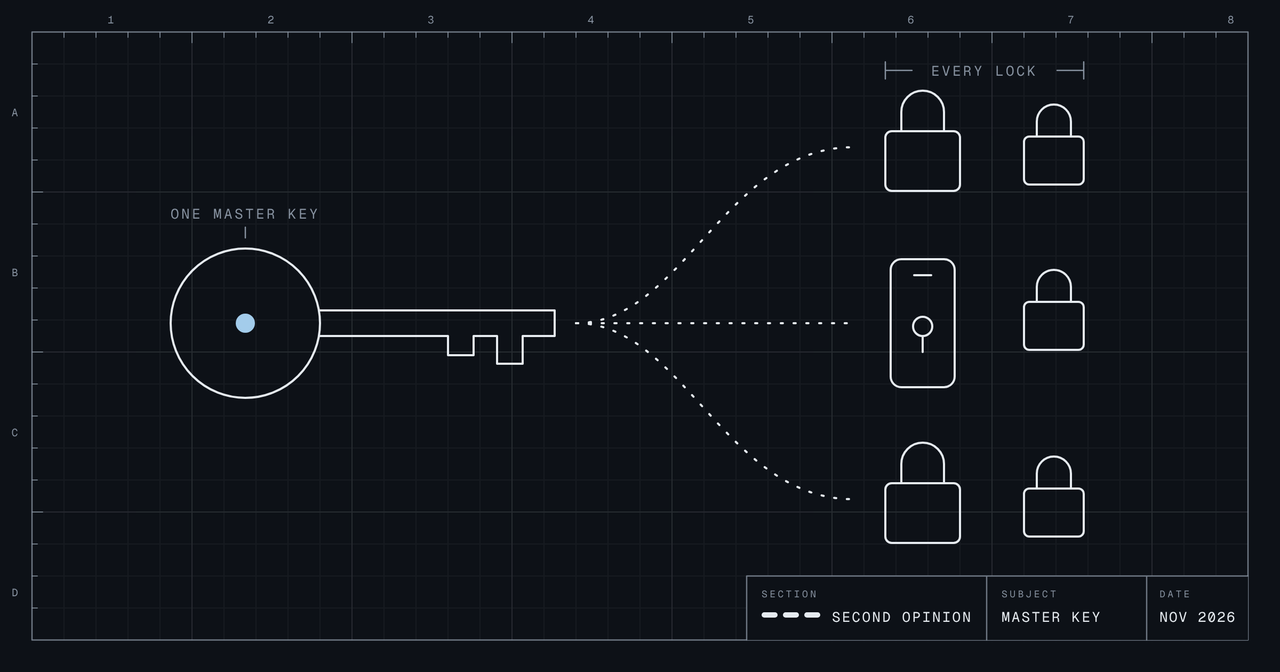
A master key for every house
Imagine a law saying every front door lock in the UK must open with a master key held by the police, so they can enter any home whenever they need to. Nobody would accept it. Our devices are private spaces in just the same way.
Master keys also have a habit of getting out. Luggage locks approved by the US Transportation Security Administration can all be opened with a small set of master keys, so that inspectors can check a bag without cutting the lock off. In 2014 a photo of those keys appeared in a Washington Post article about baggage handling. Within a year, people had worked out the shapes from the photo and published files for 3D printing them. Anyone with a printer can now open those locks.
A way into millions of people's iCloud accounts would be worth far more than a suitcase key, and far more capable people would go looking for it.
The whole thing is a farce in any case. Criminals and governments already have ways into individual phones. There are security flaws that the manufacturers don't know about yet, and companies such as Cellebrite sell phone-unlocking tools to police forces around the world.
What I'd do now
- If you already had Advanced Data Protection on, it's still on.
Leave it that way. Apple has said existing UK users will have to switch it off eventually, but that hasn't happened yet. - Know what is still protected.
Your saved passwords, your Health data, iMessage and FaceTime are still fully encrypted in the UK. Your iCloud backups, photos, notes and files are not (and iMessages backed up to iCloud lose their encryption too). - Be choosy about what goes to iCloud.
In Settings, tap your name, then iCloud, and you can turn off anything you'd rather keep on the device. - If privacy matters to you, consider moving.
Companies such as Proton offer email, calendar, file storage, photo backup and a VPN that are encrypted so only you can read them.
The full hearing is next year. At least this time we'll be allowed to watch.